From Monday 5 October 2026, the control document that travels with every consignment in Spanish road haulage for hire or reward has to be digital. This is the DeCA (Spain's electronic administrative control document), and once it becomes mandatory paper no longer counts as a control document for journeys that start and end in Spain, including cabotage by foreign hauliers. Here is what changes, who has to act and a checklist of what to sort out before the first truck leaves that week.
What changes with the DeCA on 5 October 2026
The obligation comes from the eighth transitional provision of Law 9/2025 of 3 December on Sustainable Mobility (Ley de Movilidad Sostenible). It states that the control document regulated by Order FOM/2861/2012 must be digital ten months after the law came into force. Those ten months run out on 5 October 2026.
The technical details are set out in the Resolution of 5 June 2026 of the Directorate-General for Road and Rail Transport, published in the Spanish Official Gazette (BOE) on 12 June 2026. It replaces an earlier resolution from May 2023 and defines what the file, the web address and the driver's copy must look like. For the full legal picture on one page, see what Spain's DeCA law requires.
The DeCA is not a new document
DeCA stands for documento electrónico de control administrativo. It is the same control document that Order FOM/2861/2012 has required since 2013, with the same data listed in its article 6: the contracting shipper (cargador contractual), the actual carrier (transportista efectivo), origin and destination, the nature and weight of the goods, the date, the registration plates and, where relevant, the special traffic permit and any remarks. What changes is the format.
And that format comes with rules paper never had:
- It is a PDF of no more than 5 MB, generated by an application directly from the data. A scan or a photo of a paper form is not valid.
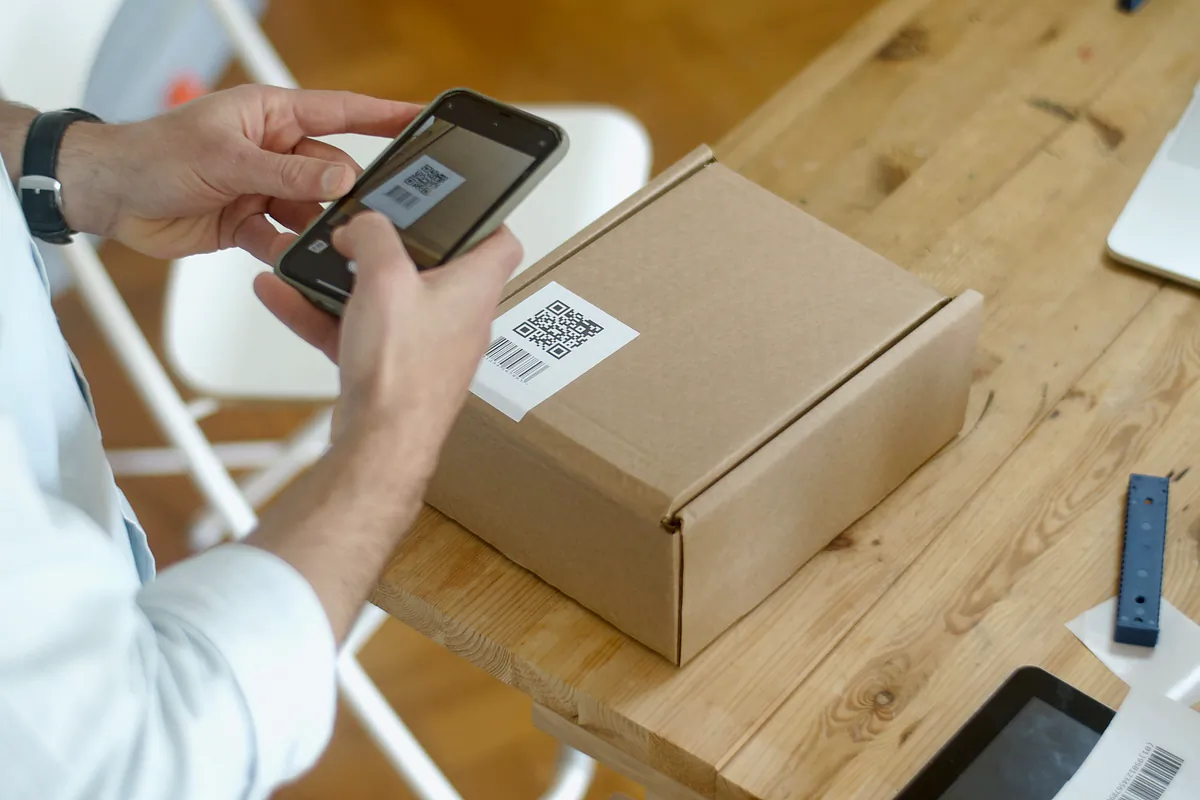
- It carries a QR code inside the PDF with the unique web address (URL) of that document.
- The URL starts with https:// and, when opened, downloads the PDF straight away, with no username, password or download button in between.
- It is created before the service starts, and the application records the date and time of creation and of any later change.
What stops being valid
Books of paper consignment notes, forms filled in by hand and any control document that exists only on paper no longer serve as the control document for domestic transport. One point will cause confusion in the first weeks: the driver can still carry the DeCA on paper. The Resolution accepts a printed copy as long as it shows the QR code, but anything written on it by hand does not count.
Who the mandatory DeCA applies to
Article 4 of the Order places the obligation on two parties: the contracting shipper and the actual carrier. Both are liable if the document is not drawn up or is not on board, although the shipper is off the hook on the second point if it can prove it issued the document.
- Actual carrier (transportista efectivo): the holder of the transport authorisation under which the journey is physically carried out. It makes no difference whether that is an owner-driver with one tractor unit or a company with eighty trucks.
- Contracting shipper (cargador contractual): whoever contracts directly with that carrier. It may be the manufacturer, but it may also be a freight agency, a forwarder, a logistics operator, a cooperative or another haulier that subcontracts the job.
Take a subcontracting chain. Áridos del Jalón, a quarry company, hires Transportes Moncayo to move gravel from its quarry in Ricla to a building site in Calatayud, and Moncayo passes one of the trips to an owner-driver from Tarazona. On that trip, the actual carrier is the owner-driver and the contracting shipper is Transportes Moncayo, not the quarry. These chains are trickier than they look, and we work through them in contracting shipper and actual carrier.
Domestic and cabotage yes, international no
The DeCA is required for domestic transport, meaning journeys with origin and destination in Spain, and for cabotage operations carried out in Spain by hauliers from other countries. If your French or Portuguese trucks load and unload inside Spain, those legs need a DeCA. A truck loading in Castellón for Lyon, or a Portuguese truck crossing Spain on its way to France, keeps using the CMR consignment note or its electronic version, the e-CMR.
No control document is needed for the cases exempted by article 2 of the Order: transport that requires no authorisation, such as work done with vehicles of up to 2 tonnes maximum authorised mass (article 33.2.d of the ROTT, the regulation implementing the Land Transport Act), house removals, recovery of crashed or broken-down vehicles in special vehicles, and parcel or small-delivery rounds with a few packages that one person can handle alone using the vehicle's own equipment. Watch out with larger vans: one over 2 tonnes that needs an authorisation does carry a DeCA, unless another of these exemptions applies.
What to have ready in the week of 5 October
The goal is to reach Monday with a system you have already tested, rather than one you have only signed up for. This is the checklist we would go through with any transport planner on the Friday before the change:
- An application that produces real DeCAs. It must build the PDF from the data, put the QR code inside it, store the file in a repository with its own URL and record the date and time of creation. It can be private software or SIMPLE, the free public platform run by the Ministry of Transport, Puertos del Estado and ADIF, which among other things generates DeCAs and which you apply to join through its website. Neither option is compulsory, the software does not need to be certified and you do not have to tell the authorities where the server is.
- Complete master data. Name, tax ID (NIF) and address of every customer that will appear as contracting shipper, tax IDs of partner carriers, and registration plates of tractor units, rigid trucks and semi-trailers. A tax ID with one wrong character today is a lost morning on Monday.
- Who issues for each relationship. With every customer and every subcontractor, agree who generates the DeCA and how the link reaches the driver. The worst outcome is two different documents for the same consignment, or none at all.
- How the driver carries it. On a phone or on paper, but always with the QR code and before setting off. If it is on a phone, the document should be saved so it can be shown without mobile coverage, and there should be a phone charger in the cab.
- A QR test. Scan it with a phone that is not logged into anything. If a login screen or a "Download" button appears, that link does not comply, because the Resolution requires the PDF to download directly.
- A procedure for changes. If the tractor unit or the destination changes mid-journey, the DeCA is amended in the system with the reason stated, never with a pen. Decide who does it in the planning office and how the driver finds out.
- One year of storage. DeCAs must be kept for at least one year. If one party generates them, it is enough for the other to be able to download them during that time.
If you are reading this after the change has started, the list still works as a catch-up plan. And if you are unsure what must appear on each document, go through the mandatory data fields one by one.
A normal working day with the DeCA
Take an ordinary job for Transportes Moncayo. At 18:30 the evening before, the planning office issues the DeCA: Harinas del Queiles, a flour mill, as contracting shipper, Moncayo as actual carrier, 24 pallets of flour in sacks weighing 24,000 kg, from the mill in Tarazona to a bakery in Alcalá de Henares, tractor unit 7350 KZT and semi-trailer R-3318-BDF. The application generates the PDF with its QR code, stores it at its URL and records the creation time, which falls before departure.
At 5:45 the driver opens the phone and the day's document is already there, saved in case coverage drops on the road. Mid-morning, a Guardia Civil traffic patrol stops the truck on the A-2. The driver shows the QR code, the officer scans it and the PDF downloads to the officer's device. Nobody has to dig through the glovebox or phone the office.
If on another day the same truck makes three drops for one customer, they can be grouped into a single DeCA as long as the contracting shipper and the actual carrier are the same for all of them. Each consignment shows its own origin, destination, goods and weight, and the order in which they are listed does not oblige the driver to follow it.
What happens to the paperwork you still have
Paper control documents you have already issued must not be thrown away. Article 9 of the Order requires them to be kept for at least one year and made available to the Land Transport Inspectorate (Inspección de Transporte Terrestre), and it allows any storage medium as long as the information is complete and legible. You can scan the last twelve months and archive them that way until each one is a year old.
That scan is for keeping old paperwork, not for issuing new documents. From 5 October, a scanned form is not a DeCA, because the Resolution requires the PDF to be generated natively from the data.
Any blank books of forms you have left no longer work as control documents. If you want to use them as delivery notes, which are a separate commercial document, make it clear to drivers that what they show at a roadside check is the DeCA.
That leaves the changeover weekend: a truck leaving on Sunday 4 October with paper and unloading on Monday 5. The rules include no specific provision for services that start before that date and end after it. The safe option is not to cut it fine: the electronic format was already allowed, so you can start issuing DeCAs a few days early and reach Monday with no paper on the road.
What is at stake if a truck leaves without a DeCA
Do not count on a grace period. In its frequently asked questions on the DeCA, the Spanish Ministry of Transport makes it clear that there will be no additional period without fines after 5 October 2026.
Not carrying the control document, not filling it in or leaving out essential data is a serious infringement under article 141.17 of Spain's Land Transport Act (LOTT), with a fine of 401 to 600 euros. The same infringement applies to companies that fail to make sure their drivers have the required documents at roadside checks. Falsifying the document or its data is a very serious infringement under article 140.9, with a fine of 4,001 to 6,000 euros.
Fines can be imposed on the contracting shipper as well as on the actual carrier, so neither side can afford to look the other way. The most common situations at a roadside check are covered in our article on control document fines.
If you still have nothing to issue DeCAs with, LeyDeca can set up your company, load your customers and vehicles and have you issuing your first DeCA the same day. The plans are on the pricing page: from €39 a month plus VAT, depending on how many drivers you have.