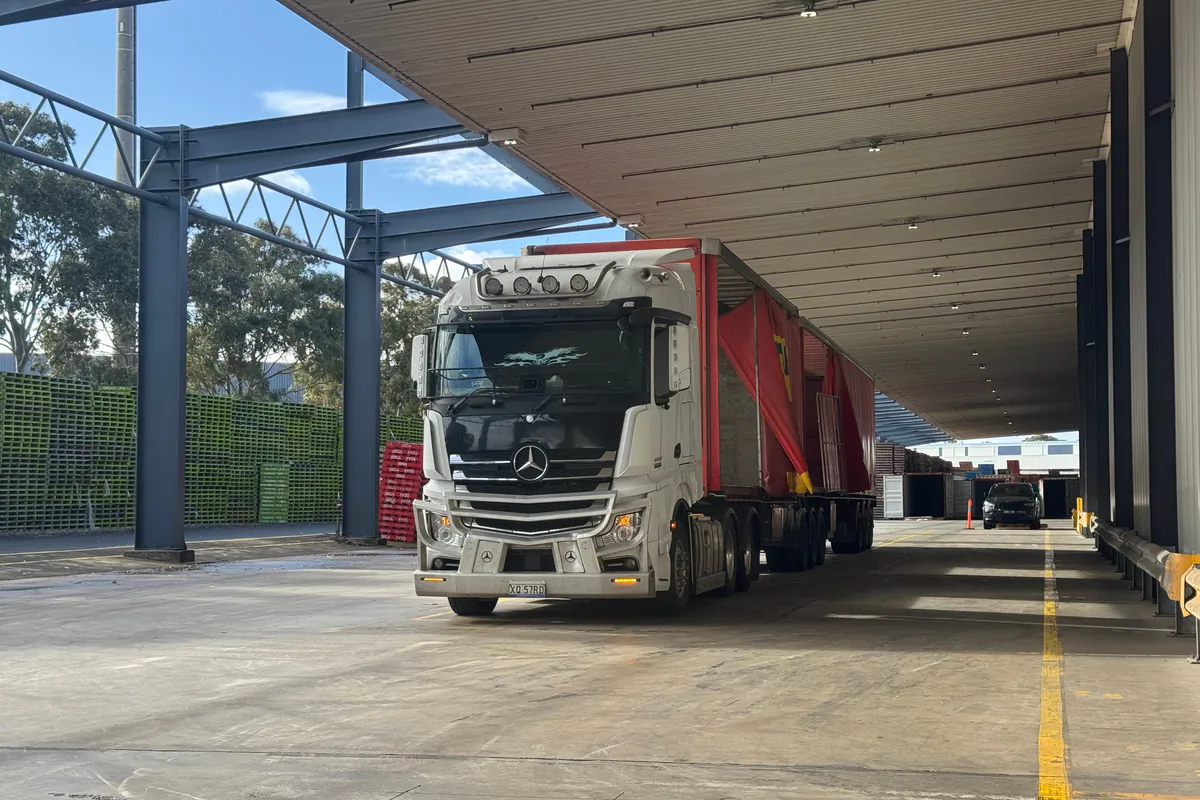
In Spain, driving without the control document, carrying one that has not been filled in or leaving an essential field blank is a serious offence under Article 141.17 of the LOTT, fined 401 to 600 euros. Falsifying the document or its data is a very serious offence: 4,001 to 6,000 euros, and 6,001 to 18,000 for repeat offenders. Since 5 October 2026 that control document is the DeCA (Spain's electronic administrative control document), so these fines now apply to a PDF with a QR code.
This guide covers what the law says, who pays in each case and the mistakes most likely to cause trouble at roadside checks, including for foreign hauliers doing cabotage in Spain.
What Spanish law says about control document fines
Road transport offences and penalties are set out in Ley 16/1987, de 30 de julio, de Ordenación de los Transportes Terrestres (the LOTT, Spain's Land Transport Act). Two articles matter for the control document: Article 141.17, which treats documentation failures as a serious offence, and Article 140.9, which treats falsification as a very serious one. The amounts are in Article 143.1. You can read the consolidated LOTT in the BOE (in Spanish).
Serious offence under Article 141.17
Article 141.17 covers a missing control document, a document that has not been completed and missing essential data. The same point also covers a company that does not make sure its drivers have the mandatory documents at roadside checks, on paper or in electronic form, and documents that are hidden or not kept. All of these are fined 401 to 600 euros under Article 143.1.d.
Very serious offence under Article 140.9
Falsifying control documents or the data in them is a very serious offence, fined 4,001 to 6,000 euros (Article 143.1.i). If the company was already penalised for another very serious offence in the previous 12 months, by a final administrative decision, the range becomes 6,001 to 18,000 euros (Article 143.1.j).
| What happens | LOTT article | Category | Fine |
|---|---|---|---|
| No control document, not completed or missing essential data | 141.17 | Serious | 401 to 600 € |
| The company does not make sure the driver has the documents at the check | 141.17 | Serious | 401 to 600 € |
| Documents hidden or not kept | 141.17 | Serious | 401 to 600 € |
| Falsified control document or data | 140.9 | Very serious | 4,001 to 6,000 € |
| Repeat falsification (another very serious offence penalised in the previous 12 months) | 140.9 and 143.1.j | Very serious | 6,001 to 18,000 € |
Within each range, the exact amount depends on the case. If you already have a notice of offence on your desk, have it checked by your adviser or trade association.
What changed with the DeCA on 5 October 2026
The DeCA is the same control document required by Orden FOM/2861/2012, which Ley 9/2025, de 3 de diciembre, de Movilidad Sostenible (the Sustainable Mobility Act) requires in digital form from 5 October 2026 for domestic transport, cabotage included. International journeys use the CMR consignment note or e-CMR instead, and we compare both in our DeCA vs e-CMR comparison. The LOTT articles above have not changed. What changes is how you comply and what gets checked.
There is no grace period either. The Ministry of Transport's DeCA FAQ (in Spanish) makes clear that there will be no additional period without fines after 5 October 2026.
The Resolution of 5 June 2026 of the Directorate-General for Road and Rail Transport (Resolución de 5 de junio de 2026, de la Dirección General de Transporte por Carretera y Ferrocarril) sets out what a valid DeCA looks like:
- A PDF of 5 MB at most, generated natively from data, never scanned.
- A QR code inside the PDF itself, pointing to its unique URL.
- Created before the service actually starts, with the creation date and time in the PDF metadata.
- An https:// URL that downloads the PDF directly, with no username, password or buttons.
From that date, paper no longer counts as a control document for domestic transport. A form filled in by hand or a printed Word template is not a DeCA. How each case is classified will be decided in each case file, but the obvious risk is that the officer treats it as if you had no document at all. A printed copy of the DeCA itself is different: the Resolution allows the driver to carry the PDF on paper, always with the QR code, and that copy is valid.
Who pays the fine, the contracting shipper or the actual carrier
The fine can fall on the contracting shipper (cargador contractual, whoever contracts directly with the haulier doing the job), on the actual carrier (transportista efectivo, the holder of the transport authorisation used for the journey) or on both. Liability is split in Article 7 of Orden FOM/2861/2012, as worded by Orden TRM/282/2026 of 25 March:
- Both are liable if the document is not issued or is not on board. The contracting shipper is exempt from the second if it proves it issued the document.
- The contracting shipper is liable for its own details (name, tax ID and address), the actual carrier's name and tax ID, origin and destination, and the nature and weight of the goods, plus any remarks it adds.
- The actual carrier is liable for the special traffic permit if there is one, the date of transport and the registration plates, plus any remarks it adds.
An example. Cerámicas del Ebro hires Transportes Moncayo to carry floor tiles from Castellón to Getafe: 18,400 kg, tractor unit 4821 LKM and semi-trailer R-7745-BCX. If the DeCA says 14,000 kg, that is Cerámicas del Ebro's responsibility. If the semi-trailer plate is missing, it is Transportes Moncayo's. And if the driver has no DeCA, both are liable, unless Cerámicas del Ebro can show it had issued one.
With a DeCA that proof is easier than with paper, because the software must record the creation date and time of every file. When there is subcontracting, the contracting shipper is no longer the factory but the agency or haulier that subcontracts. We explain it with examples in our guide to contracting shippers and actual carriers.
Typical roadside situations that end in a fine
You do not need to cheat to leave a check with a fine. A slip is enough. These are the cases worth planning for from the first week of October.
The driver cannot find the DeCA
The document exists, but it is sitting in the transport planner's inbox or in a phone folder the driver cannot find. For the officer, what is not shown is not there. The Resolution says the driver gets a copy before the service starts, on the phone or on paper, and the LOTT treats it as a serious offence when the company does not make sure the driver has it. What the officer does with the QR code is covered in our guide to roadside inspections and the DeCA QR code.
The DeCA was issued after the truck left
The file has to be created before the service actually starts. If the truck leaves Castellón at 06:10 and the DeCA shows a creation time of 08:45, it does not meet that requirement, and the time is in the PDF metadata. Expect this in the first weeks, when the traffic office is rushed and catches up on paperwork mid-morning.
The semi-trailer plate is missing
For an articulated vehicle, both the tractor unit plate and the semi-trailer or trailer plate must appear. It is often forgotten, especially when trailers are swapped at the depot. If the officer sees R-7745-BCX coupled and the DeCA only says 4821 LKM, an essential field is missing, and the actual carrier is liable for it. All the fields are listed in our guide to DeCA mandatory data fields.
Tractor swap mid-journey not recorded
A breakdown near Tarancón forces a change of tractor unit. The Order says that if the vehicle changes once transport has started, this must be recorded in the document. With a DeCA it is done by one of the two methods in the Resolution (amending the PDF with the reason for the change, or generating a new one), and the updated PDF must reach the driver. Either way, the old data stays on record.
Handwritten corrections on the printed copy
The delivery point changes, so the driver crosses out Getafe and writes Pinto on the paper copy. That note does not count: the Resolution says handwritten annotations on a printed copy are disregarded, and the only valid way to amend a DeCA is the one in its fifth section. For the officer, the document still says Getafe.
A weight you cannot explain
This needs a distinction. The Order allows another unit of measure when the exact weight is hard to know at loading: if Áridos del Jalón removes soil from a building site with no weighbridge nearby, it can declare it in cubic metres. What the law punishes as very serious is falsifying the document or its data, for example knowingly entering a wrong weight. Where an honest mistake ends and falsification begins is assessed by whoever handles the case, so whatever you enter should have an explanation.
A URL that does not download the PDF
If scanning the QR code takes the officer to a login page, or to a web page with a "Download" button, that link does not meet the Resolution. The URL must use HTTPS with TLS 1.2 or higher, trigger a direct PDF download and not expire before the service ends. Test it before an officer does.
Six-month-old documents nobody can find
Inspections also happen at the office. Control documents must be kept for at least one year for the Spanish Transport Inspectorate (Inspección de Transporte Terrestre), and failing to keep them falls under the same Article 141.17. The contracting shipper and the actual carrier can each have their own repository; if one of them generated the files, it is enough for the other to be able to download them throughout that year.
How to avoid DeCA fines day to day
Most of it comes down to routine. This is the checklist we would go through with any traffic office before 5 October:
- Issue the DeCA before the truck moves. The creation time is recorded and can be checked.
- Leave no essential field blank. Shipper with address, tax IDs of both parties, origin and destination, goods and weight (or another unit), date and both plates for articulated vehicles.
- Give the driver a copy before departure, on the phone or printed, always with the QR code.
- Test the QR code on a phone that is not logged into your software. The PDF should download with no extra steps.
- Make changes in the system. No pens: an amendment with a reason or a new PDF, sent to the driver.
- Keep documents for a year and check that the other party can download them.
And two things that are not missing even if they look like it: a signature and the driver's name are not mandatory data in the goods control document. An unsigned DeCA is not incomplete for that reason.
LeyDeca will not issue a DeCA with a mandatory field missing, records the creation time, keeps every version when something changes and logs each time someone opens the link. If you want to see how that fits your operation, here are the DeCA software features.